Species → Polar bear
Polar bear
Ursus maritimus
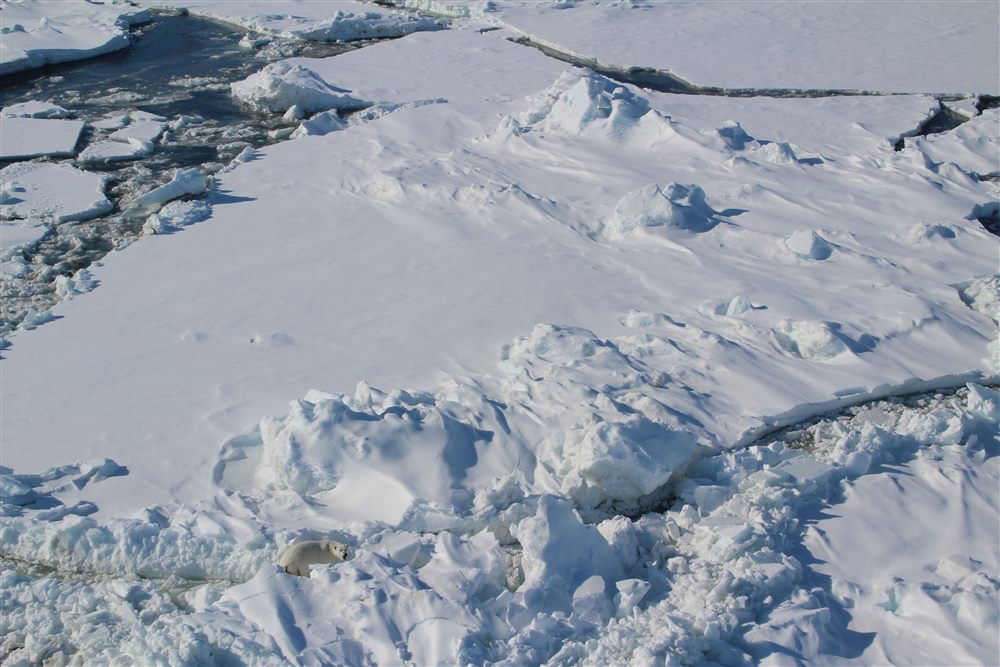
The polar bear is the apex predator of the sea ice, specialized in hunting young ringed seals. Its IUCN status is Vulnerable, with a projected decline linked to sea ice loss. The surprise of this entry: its disappearance would have a relatively small ecological impact — the seal population it hunts is limited mostly by the extent of the ice, not by the bear. A sharp contrast between a symbol of climate change and its measured role in the ecosystem.
What if it disappeared?
Impact LowPolar bears preferentially target young ringed seals and only shift to older individuals once young seals become scarce — a sign that their predation selectively removes young seals from the population. Without that pressure, young ringed seal survival would likely rise as early as the following season.
ExtrapolatedDetail
Extrapolation à partir de Reimer, J.R., Brown, H., Beltaos-Kerr, E. et de Vries, G. (2019). Evidence of intraspecific prey switching: stage-structured predation of polar bears on ringed seals. Oecologia, 189(1), 133–148 — l'étude documente la sélection d'âge par l'ours, pas un scénario sans ours.
The authors show that polar bears adjust their hunting strategy according to the age structure available among ringed seals, their primary prey — evidence of selective predation that is measured rather than assumed. Concluding that fully lifting this pressure would raise young seal survival is still a step beyond what the study directly measures, since no bear-free scenario was observed.
What's missing to confirm it: No data on young ringed seal survival in a polar-bear-free area was found in the sources gathered here — the extrapolation starts from predation selectivity, not a direct measurement of its absence.
Over a decade, better young-seal survival could shift the ringed seal population's age structure toward younger individuals on average — but nothing indicates whether this would translate into more seals overall, since sea ice and fish abundance likely remain the main factors limiting their numbers.
HypothesisOver a century, the ringed seal population would likely settle at a level set mainly by sea ice extent and the availability of the fish they eat, rather than by predation: the idea of a seal population boom in the polar bear's absence is plausible in theory, but nothing indicates it would be the dominant factor.
HypothesisOver a thousand years, no other predator would hunt seals on the sea ice the way polar bears do: orcas or other marine predators might fill part of that role in open water, but the on-ice predator niche would remain vacant for the long term.
HypothesisDocumentation
-
IUCN SSC Polar Bear Specialist Group — statut et effectifs 2024
Accessed August 7, 2026
-
Reimer et al. (2019) — Evidence of intraspecific prey switching, Oecologia
Accessed August 7, 2026
Last verified: August 16, 2026