Species → Red Wolf
Red Wolf
Canis rufus
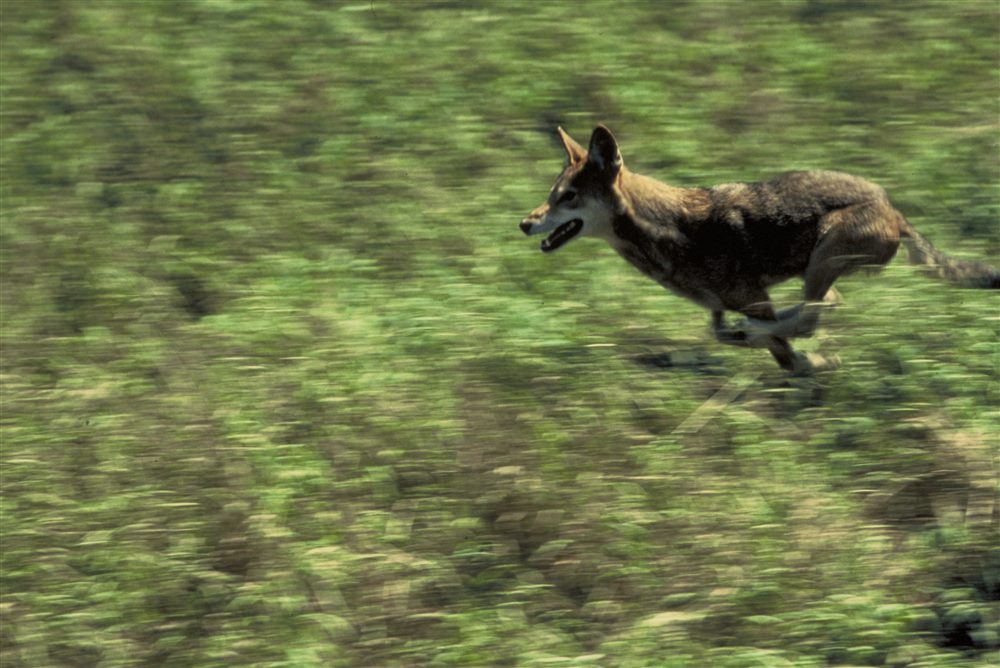
What if it disappeared?
Impact LowRight after its population collapsed in the 1960s, the small and medium-sized mammals of the southeastern United States — raccoons, rodents, small deer — would likely have stopped being kept in check by this mid-sized predator that had roamed the region for millennia, their numbers beginning to grow locally in places where it had still been hunting only a few years before.
HypothesisA decade after that collapse, the reduced pressure would likely have let certain prey populations settle into higher densities for good, and the coyote — already present in the region and able to fill a similar niche — had probably begun taking up part of that space, without exactly replicating the same diet or hunting style.
HypothesisA century after a collapse like the one in the 1960s, a population this reduced generally never recovers on its own: that's roughly where the red wolf actually stands today, six decades on, with only 16 wild individuals and the species' survival now depending on a captive breeding program rather than natural recovery.
HypothesisOver a thousand years, the wild red wolf lineage as it existed before the 1960s would likely never be rebuilt exactly as it was: even if captive-born individuals eventually repopulated the southeastern United States, they would carry the genetic imprint of an extreme bottleneck, and the coyote would probably have long since taken up part of the ecological role left vacant.
HypothesisDocumentation
-
U.S. Fish & Wildlife Service — Red Wolf Recovery Program
Accessed August 7, 2026
-
Wolf Conservation Center — Red Wolf, statut et effectifs
Accessed August 7, 2026
Last verified: August 16, 2026