Species → Leopard
Leopard
Panthera pardus
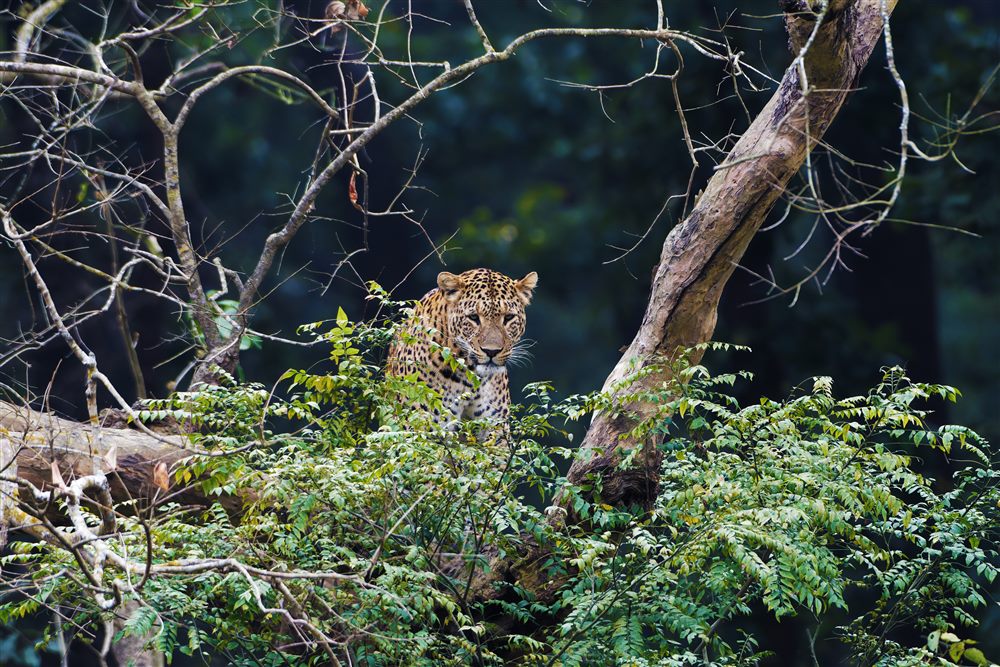
What if it disappeared?
Impact HighThe leopard hunts by ambush, which keeps its prey — baboons, warthogs, small ungulates — constantly on guard. Without it, that vigilance would likely drop off almost immediately: baboons would spend more time feeding and less time watching for danger, clearing the way for their troops to grow quickly.
HypothesisThat drop in vigilance quickly shows up in real numbers: in three of the six reserves studied by Ghana's wildlife services, the complete disappearance of large predators — including the leopard — coincided with a 365% rise in baboon sightings and a 500% expansion of their range, which went on to intensify conflict with neighboring crops.
DocumentedDetail
Brashares, J.S., Prugh, L.R., Stoner, C.J. & Epps, C.W. (2010). Ecological and conservation implications of mesopredator release. In Terborgh, J. & Estes, J.A. (eds), Trophic Cascades: Predators, Prey, and the Changing Dynamics of Nature. Island Press, pp. 221-240.
The analysis draws on decades of comparable wildlife surveys across reserves, directly linking the documented disappearance of predators to the measured rise of baboons on the same territory over the same period. The case is used as a reference example in Ripple et al.'s (2014, Science) global synthesis on large carnivores.
Over a century, that baboon explosion would likely settle into a new ceiling, set by available food rather than by predation — a lasting shift where conflict with crops becomes the norm rather than the exception, a new equilibrium settling in where the old one used to be.
HypothesisOver a thousand years, smaller predators — jackals, caracals — would likely take up part of the space the leopard left behind, but none hunt by ambush the same way it did: baboons and its other prey would stay lastingly more numerous and bolder than before its disappearance, a landscape that would never quite return to its original balance.
HypothesisDocumentation
-
Brashares et al. (2010) — Ecological and conservation implications of mesopredator release, in Trophic Cascades (Island Press)
Accessed August 10, 2026
-
Tshabalala et al. (2021) — Leopards and mesopredators as indicators of mammalian species richness across diverse landscapes of South Africa, Ecological Indicators
Accessed August 10, 2026
-
IUCN Red List — Panthera pardus, statut et estimation de population mondiale
Accessed August 10, 2026
Last verified: August 16, 2026