Species → Northern Giraffe
Northern Giraffe
Giraffa camelopardalis
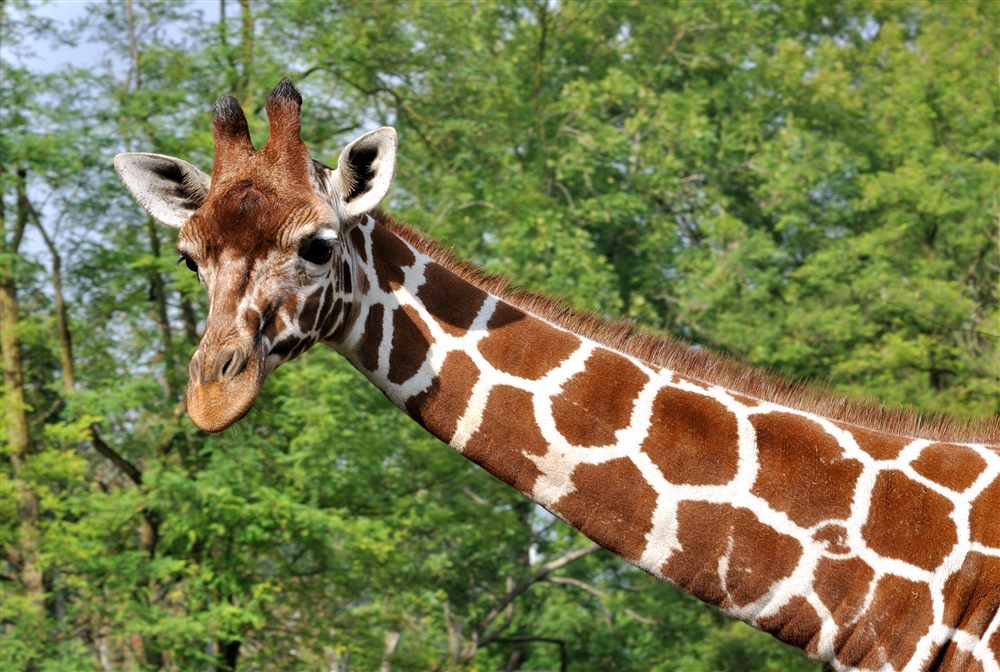
What if it disappeared?
Impact ModerateWithout giraffe, fast-growing young acacias immediately escape the only browser able to reach well above the height other herbivores can — at Ithala Game Reserve in South Africa, it was precisely the giraffe's arrival, where it had been absent, that triggered high mortality in several acacia species, to the point of locally wiping out Acacia davyi.
ExtrapolatedDetail
Extrapolation par inversion de Bond & Loffell (2001), qui documentent l'effet de l'introduction de la girafe dans une réserve où elle était absente — pas l'effet inverse d'un retrait immédiat de la pression de broutage en hauteur.
The study, conducted at Ithala Game Reserve, shows that after giraffe were introduced, several acacia species saw higher mortality from high-canopy browsing, to the point that Acacia davyi disappeared locally — giraffe being the only browser able to reach and kill mature trees beyond the reach of other herbivores. Without giraffe, this height-control mechanism stops immediately: young acacias growing beyond the reach of other browsers no longer meet anything to stop them.
What's missing to confirm it: No study directly measures, within a single year, the removal of this pressure once giraffe disappear — the reasoning inverts the documented effect of its introduction.
Ten years on, acacia species like the ones locally lost at Ithala under giraffe pressure — Acacia davyi foremost — would have a real chance of reaching maturity instead of being cut down mid-growth, for lack of the one browser able to prune them at that height.
ExtrapolatedDetail
Extrapolation par inversion de Bond & Loffell (2001) — la même étude, pas une mesure indépendante à dix ans du retrait de la girafe.
Acacia species differ markedly in their ability to "escape" giraffe by growing quickly upward and out of reach, which at Ithala explains why some decline sharply while others hold on. Without giraffe, this race against high-canopy browsing has no opponent left: over a decade, individuals that would normally have been pruned or killed mid-growth have time to outgrow the height that made them vulnerable.
What's missing to confirm it: No ten-year monitoring of an acacia population following a real giraffe disappearance — only the reverse scenario (giraffe appearing where it had been absent) is measured.
If the decline already under way among Kordofan and Nubian giraffe — more than 80% over a few decades — continued to total disappearance over a century, the savannas involved would plausibly come to be dominated by acacias that had time to grow tall without ever being pruned from above, a structure durably different from what's observed at Ithala with giraffe present.
HypothesisOver a thousand years, even if giraffe returned, the savanna's woody structure would likely not re-form identically: other large herbivores such as elephants would take on part of its browsing role, but none reach the same height or target the same acacia species it does.
HypothesisDocumentation
-
Bond & Loffell (2001) — Introduction of giraffe changes acacia distribution in a South African savanna, African Journal of Ecology
Accessed August 10, 2026
-
IUCN — Four giraffe species officially recognised in major conservation reclassification (2025)
Accessed August 10, 2026
-
Giraffe Conservation Foundation — State of Giraffe 2025
Accessed August 10, 2026
Last verified: August 16, 2026