Species → Plains Zebra
Plains Zebra
Equus quagga
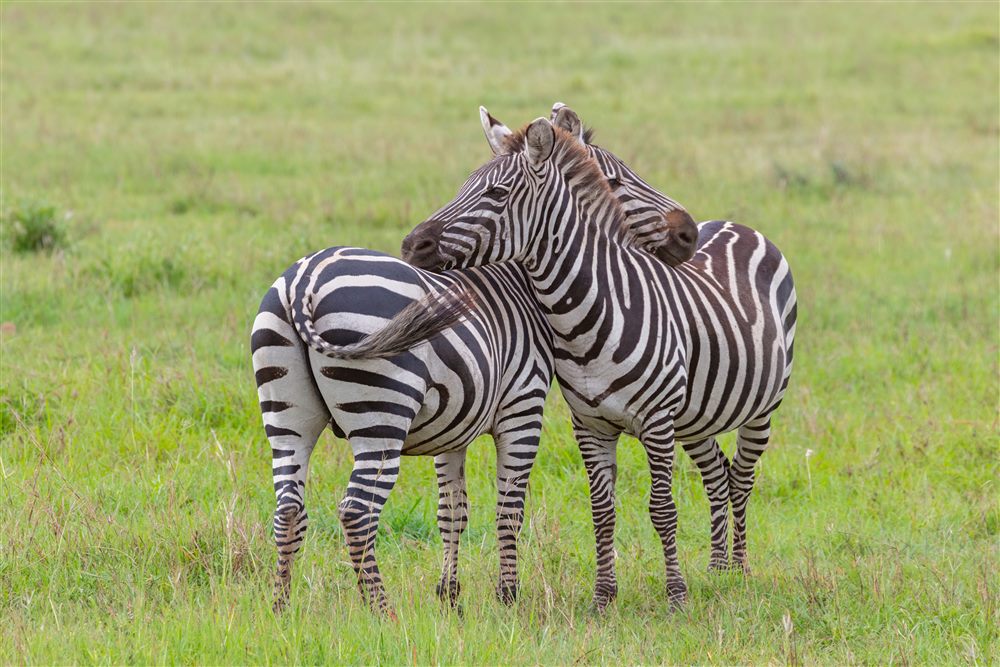
What if it disappeared?
Impact ModerateWithout the zebra leading the way, a different species would open the great Serengeti migration by grazing the tall, least nutritious stems first. Previously pushed ahead by competition with the zebra, the wildebeest would find itself in front — but facing grass no species had cleared ahead of it.
ExtrapolatedDetail
Extrapolation à partir d'Anderson, Hepler, Holdo et al. (2024), qui documentent l'ordre de passage actuel — zèbre, puis gnou, puis gazelle de Thomson — et le mécanisme de compétition qui le produit, sans avoir testé ce qui se produit quand le premier maillon de cette chaîne disparaît.
Anderson et al. (2024) show, over eight years of camera-trap, GPS, and metabarcoding monitoring, that the wildebeest pushes the zebra ahead through direct competition, and that the wildebeest's own grazing then facilitates access to nutritious regrowth for the trailing Thomson's gazelle. Removing the first link in that chain hasn't been tested experimentally; this point assumes the wildebeest would inherit the lead position with no species preparing the regrowth ahead of it.
What's missing to confirm it: Empirical confirmation that the wildebeest would actually take the lead in the zebra's absence, rather than simply losing the benefit of prior grazing without any reordering of the migration.
Over ten years, that less-prepared regrowth would likely reduce the wildebeest's and then the Thomson's gazelle's access to the most nutritious grass at the right point in their passage — a missing first link in the facilitation chain, weakening forage quality available to the two trailing species throughout the migration.
HypothesisOver a century without zebras, the Serengeti-Mara migration would no longer be a three-species succession but one missing its first link. The wildebeest, now leading, would bear alone the period when grass is tallest and least digestible, before the Thomson's gazelle in turn gets regrowth that is itself less prepared than it is today.
HypothesisOver a thousand years, other large savanna herbivores might partly take on the zebra's scouting role — but without ever exactly reproducing the three-species grazing sequence that today defines the largest terrestrial mammal migration on Earth.
HypothesisDocumentation
-
Anderson et al. (2024) — Interplay of competition and facilitation in grazing succession by migrant Serengeti herbivores, Science
Accessed August 10, 2026
-
IUCN Red List — Equus quagga, statut et population
Accessed August 10, 2026
Last verified: August 16, 2026