Species → Monarch butterfly
Monarch butterfly
Danaus plexippus
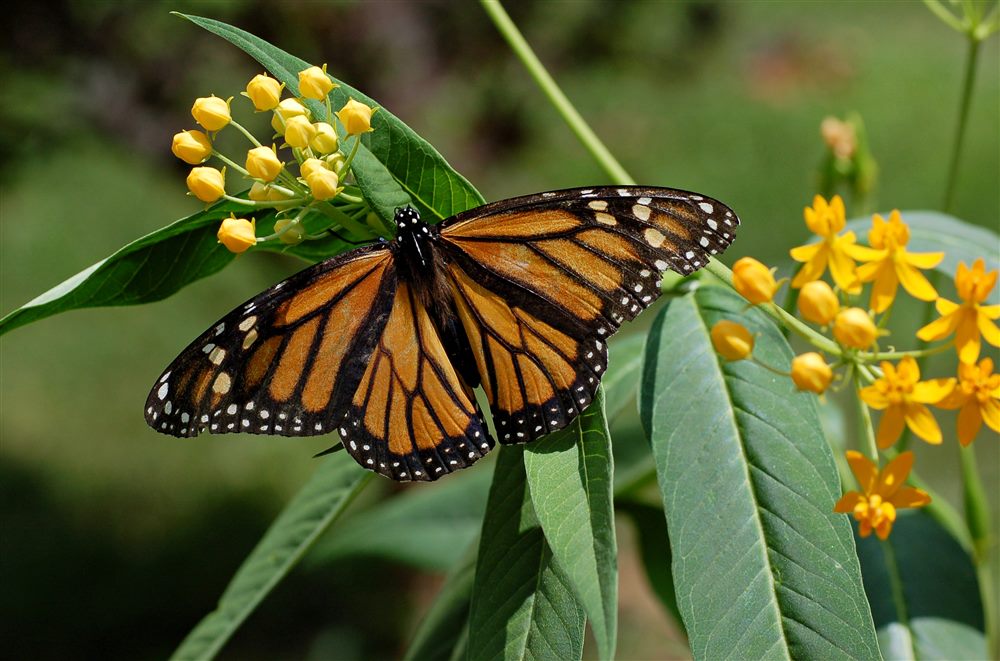
The monarch is one of North America's few migratory insects, known for its annual journey between Canada and Mexico. Its IUCN status is Endangered: the western population is in catastrophic decline, the eastern one in steep decline. This entry shows a counterintuitive result: its disappearance would change little in the short term for the milkweed it depends on — that host plant is what conditions its future — and more in the long term, once other foragers have reorganized their use of the same flowers.
What if it disappeared?
Impact ModerateThe monarch is already eaten by only a handful of predators able to tolerate its toxins, including certain birds at its Mexican overwintering sites. A year after its disappearance, this small group of predators would likely have other prey available, with no effect yet measurable at the ecosystem scale.
HypothesisTen years after its disappearance, the milkweed the monarch depends on would likely show no notable change: it is the loss of this plant to herbicide use that limits the monarch, not the other way around — nothing suggests the plant needs the butterfly to persist.
ExtrapolatedDetail
Extrapolation à partir de Pleasants & Oberhauser (2013), qui documentent la perte de l'asclépiade agricole comme cause du déclin du monarque, pas l'effet inverse d'une disparition du monarque sur la plante.
Pleasants & Oberhauser (2013) show that the loss of milkweed from cultivated fields, driven by herbicide use on tolerant crops, is what limits the monarch population — the documented relationship runs one way. Nothing in the study suggests the plant's own population depends in turn on the butterfly's presence.
What's missing to confirm it: No study directly measures the effect of the monarch caterpillar on the milkweed population itself — the reasoning starts from the documented asymmetry between the two.
A century after its disappearance, other pollinating insects already visiting the same flowers — wild bees, other butterflies — would plausibly have filled the space the monarch left, without any identifiable gap in local pollination.
HypothesisOver a thousand years, the pollination of the flowers it once visited and the diet of its few predators would long since have reorganized around other species, leaving no lasting trace of the monarch in how the ecosystem functions.
HypothesisDocumentation
-
IUCN Red List — Danaus plexippus (population migratoire), statut 2022
Accessed August 7, 2026
-
Pleasants & Oberhauser (2013) — Milkweed loss in agricultural fields, Insect Conservation and Diversity
Accessed August 7, 2026
Last verified: August 16, 2026