Species → Emperor Penguin
Emperor Penguin
Aptenodytes forsteri
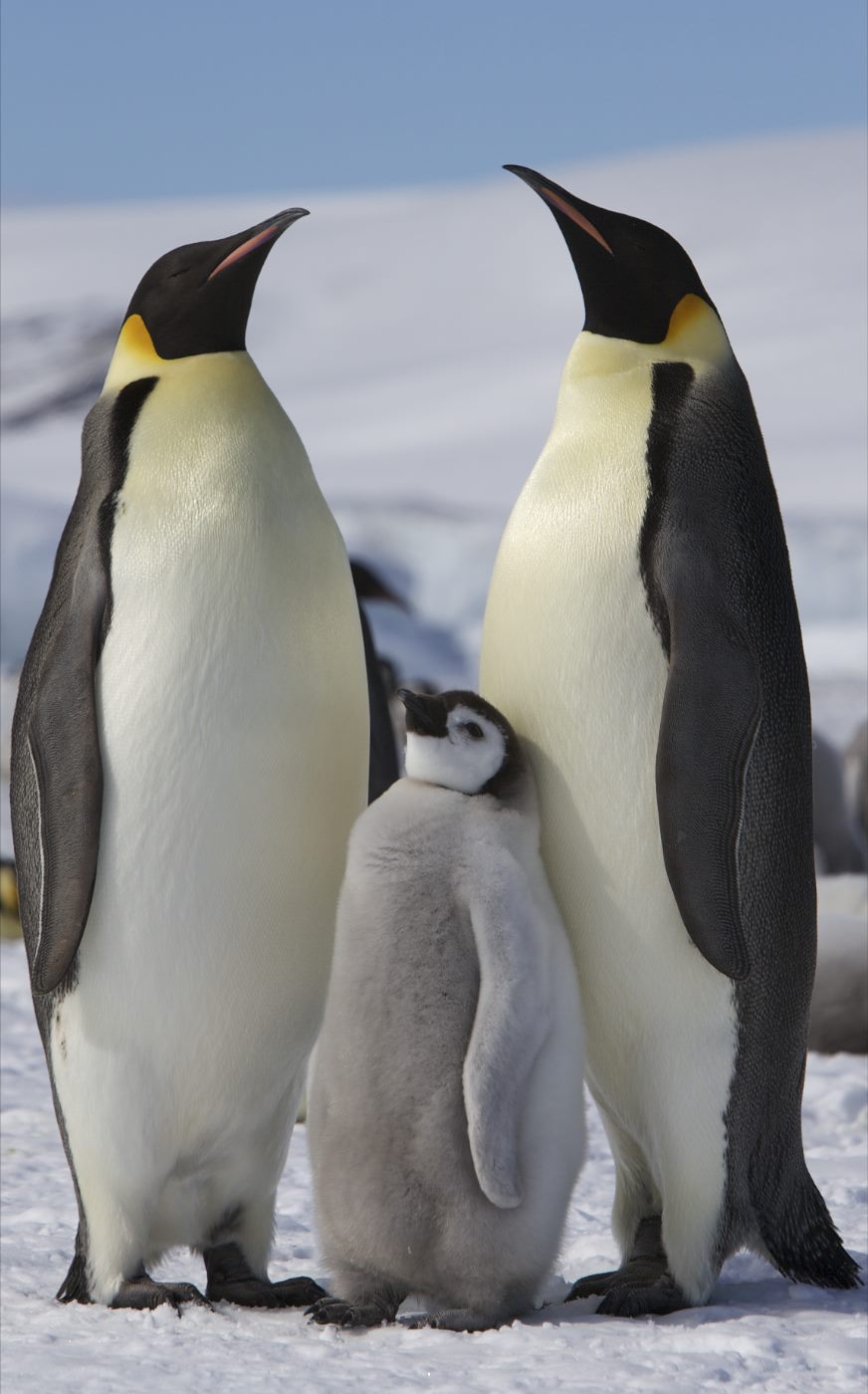
What if it disappeared?
Impact ModerateThe emperor penguin hunts krill and small fish under the sea ice; without it, that hunting pressure disappears almost overnight around former colonies, and leopard seals or skuas that occasionally took an egg, a chick, or a weakened adult must immediately shift that part of their diet elsewhere.
HypothesisThat dietary shift becomes a new pressure: predators and scavengers that relied even partly on the penguin turn more toward other seabird colonies, while the slightly more abundant local krill and fish mostly benefit other krill hunters — crabeater seals, whales — never the penguin itself, since it no longer exists.
HypothesisThe emperor penguin is the only large predator that breeds directly on sea ice rather than on land, which let it hunt under dense ice inaccessible to most competitors. A century without it, that hunting niche would stay empty: other krill predators would redistribute themselves differently along the coast, without ever recreating such a concentrated predation hotspot in the same place.
HypothesisOver a thousand years, the Antarctic food web would permanently reorganize around predators that don't need stable ice to breed — exactly what made the emperor penguin distinctive. That part of the system, the krill and fish hunted under thick sea ice, would never again have an equivalent predator.
HypothesisDocumentation
-
IUCN Red List — Aptenodytes forsteri, réévaluation avril 2026
Accessed August 14, 2026
-
Fretwell, Boutet & Ratcliffe (2023) — Record low 2022 Antarctic sea ice led to catastrophic breeding failure of emperor penguins, Communications Earth & Environment
Accessed August 14, 2026
-
Jenouvrier et al. (2021) — The call of the emperor penguin: Legal responses to species threatened by climate change, Global Change Biology
Accessed August 14, 2026
Last verified: August 16, 2026