Species → American Chestnut
American Chestnut
Castanea dentata
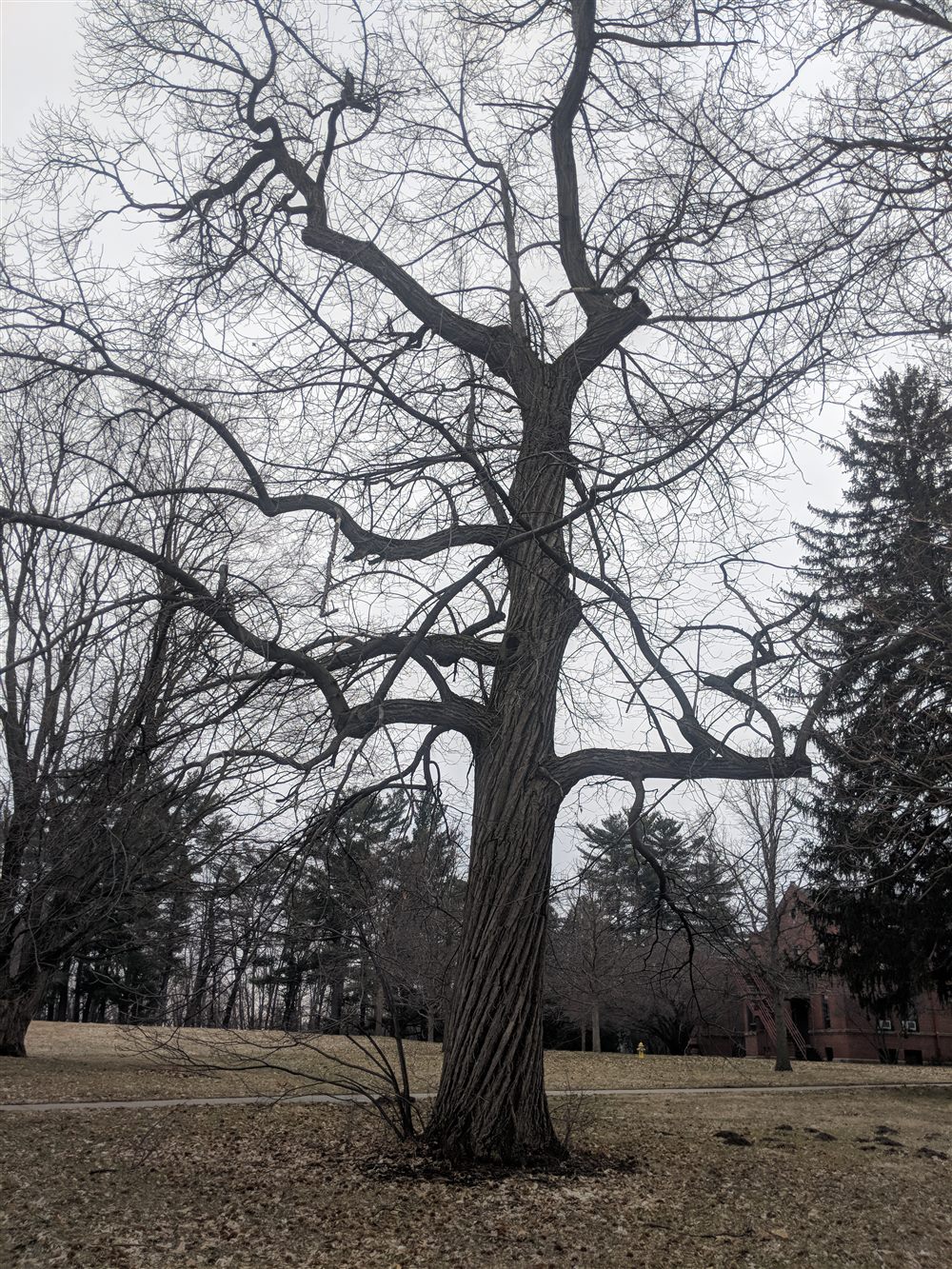
What if it disappeared?
Impact HighIn the very first years after a mature chestnut died, the animals that relied on its nuts — produced abundantly and reliably every autumn, unlike acorns, whose harvest swings widely from year to year — would suddenly lose one of their most predictable food sources.
HypothesisThe fungus spread "with extraordinary speed" across the chestnut's entire range: within a decade, the loss of this reliable food source was no longer a local accident but a regional phenomenon, hitting both the wildlife that depended on it and young chestnuts themselves, killed before they were old enough to bear fruit.
ExtrapolatedDetail
Extrapolation à partir de SUNY College of Environmental Science and Forestry (ESF) — The American Chestnut Project History, qui documente la vitesse de propagation du champignon sur l'ensemble de l'aire de répartition, sans mesurer directement l'effet sur la faune qui dépendait du fruit.
The pathogen, Cryphonectria parasitica, arrived on Japanese chestnuts imported as early as 1876, met no co-evolved resistance in the American species, and spread with extraordinary speed across its entire range. That documented speed on the tree's side suggests the loss of its food resource didn't stay a localized event but spread at the same pace.
What's missing to confirm it: A direct measurement of chestnut-dependent wildlife populations during the decade following the fungus's arrival in a given region, rather than an inference from the documented spread rate alone.
Nearly a century after it vanished from the canopy, across more than 6,000 leaves inspected on Long Island, none of the three leafminer species that fed exclusively on American chestnut were found — half a century after an earlier survey had recorded all three, a sign they likely disappeared along with their one and only host plant.
ExtrapolatedDetail
Extrapolation à partir de Hough, K.E., Eiseman, C.S., Perreault, S., McGuinness, H., Burke, R.L. et Nieto-Fernandez, F.E. (2024). Survey of Leafminers on American Chestnut and other Castanea spp. (Fagales: Fagaceae) on Long Island, NY. Environmental Entomology, 53(4), 659–664 — un résultat négatif sur un seul site, pas encore une confirmation d'extinction à l'échelle de l'aire historique.
A 1978 survey had recorded 29 leafminer species using chestnut as a host plant, three of them feeding exclusively on this one species. Repeating that same fieldwork on Long Island's surviving chestnuts, the authors found none of these three specialist species — a negative result that does not formally prove extinction, but is consistent with it.
What's missing to confirm it: A search covering the chestnut's entire historic range, rather than a single Long Island site, before formally concluding extinction rather than mere undetected extreme rarity.
Over a thousand years, even if a blight-resistant chestnut eventually reclaimed its place in the canopy — and genetic-engineering restoration attempts have already stumbled, with the organization most invested in the project withdrawing support in 2023 after disappointing results — the specialist insects that lived on nothing else would likely have no surviving population left anywhere to recolonize its leaves.
HypothesisDocumentation
-
IUCN Red List — Castanea dentata, statut de conservation
Accessed August 14, 2026
-
SUNY ESF — The American Chestnut Project History
Accessed August 14, 2026
-
Hough et al. (2024) — Survey of Leafminers on American Chestnut and other Castanea spp. (Fagales: Fagaceae) on Long Island, NY, Environmental Entomology
Accessed August 14, 2026
-
The American Chestnut Foundation — Darling 58/54
Accessed August 14, 2026
Last verified: August 16, 2026